
HEATH WAE: MINERAL MERIDIAN
OPENING THURSDAY, APRIL 2, 6—8PM
ON VIEW APRIL 3—MAY 30, 2026
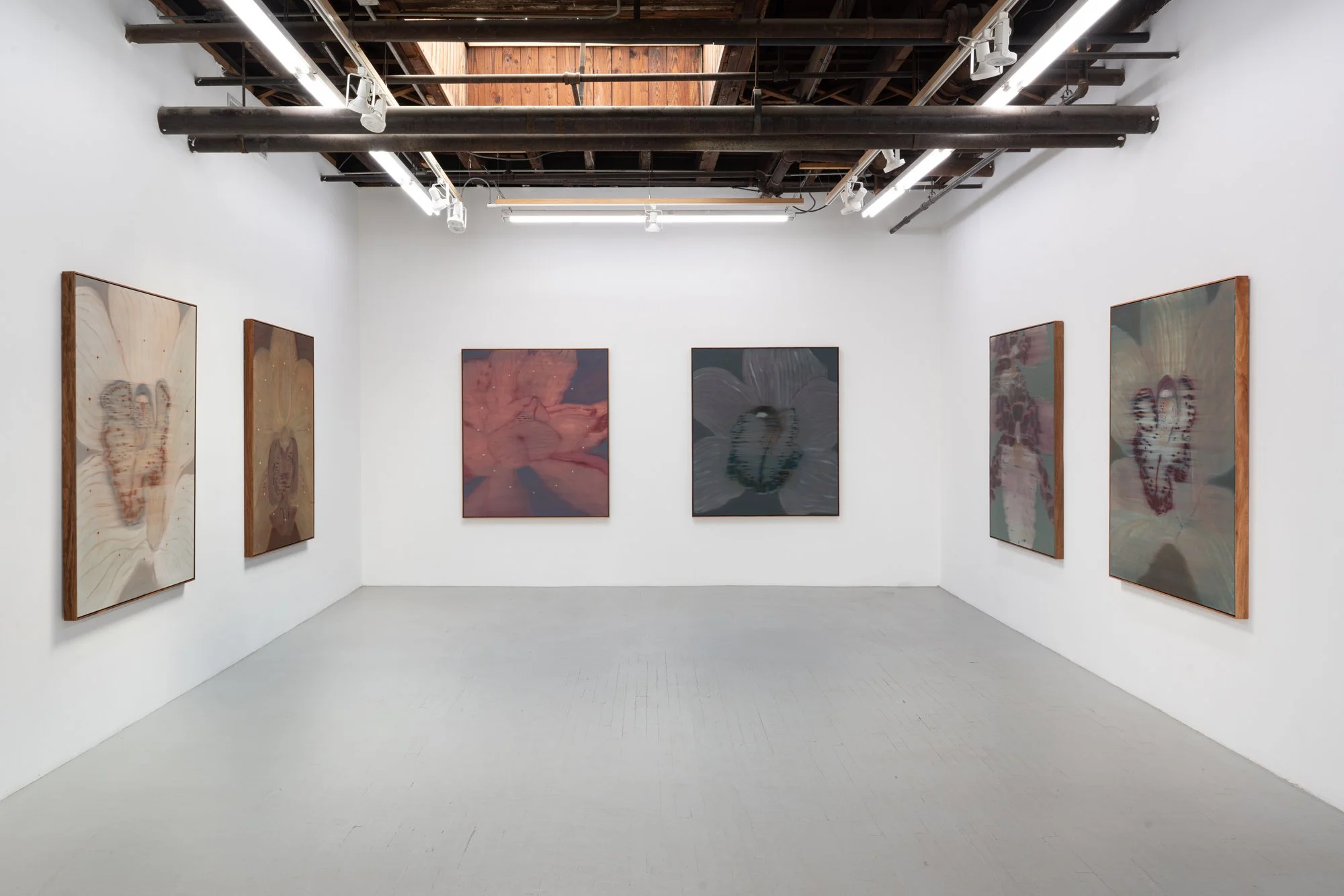
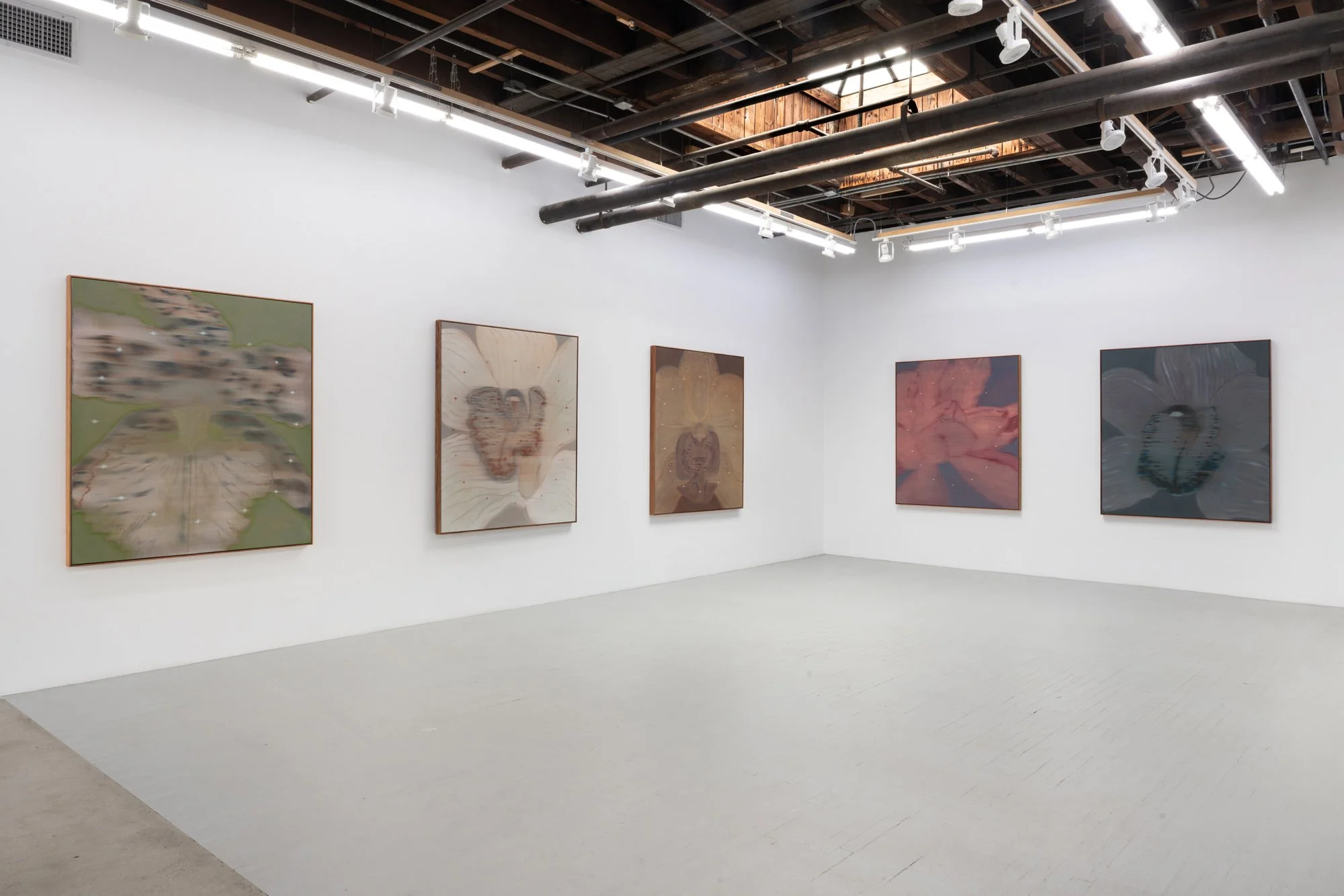
CARVALHO announces the opening of Mineral Meridian, Australian artist Heath Wae’s inaugural solo exhibition with the gallery and first in New York. Working with distilled, hand-foraged materials, Wae constructs his paintings from compounds whose origins remain active within them, giving rise to surfaces that register both physical density and temporal charge. Rather than resolving into fixed image, these works remain in a state of material transition, carrying forward the conditions of their origin into the present of the work. Mineral Meridian opens on April 2 from 6–8pm, with the artist in attendance, and remains on view through May 30.
In their 1980 work of poststructuralist philosophy, A Thousand Plateaus, Gilles Deleuze and Félix Guattari use the orchid to illustrate several of the text’s interconnected concepts. The orchid figures what the pair conceptualise as becoming, the process by which animals, humans, and other entities move through transitory states of being. Becoming is not about navigating between fixed, static moments; instead, becoming is imagined as an open-ended, expansive form of change sensitive to the enmeshment of the human and non-human. This dynamic process of evolution and formation is what the orchid embodies. Certain orchids adopt the physical and sensory attributes of female wasps in order to attract male wasps, a trans-species performance of deception, seduction and survival. Pollen is transferred between orchids, carried on the bodies of wasps beguiled by the orchids’ resemblance (and ability to produce convincingly similar pheromones) to their mates. The wasp becomes, for Deleuze and Guattari, an extension of the orchid’s reproductive system, a part of its body. The orchid attracts the wasp through imitation, but what arises out of this mimicry is a full and continuous entanglement via mutual acts of reconfiguration.
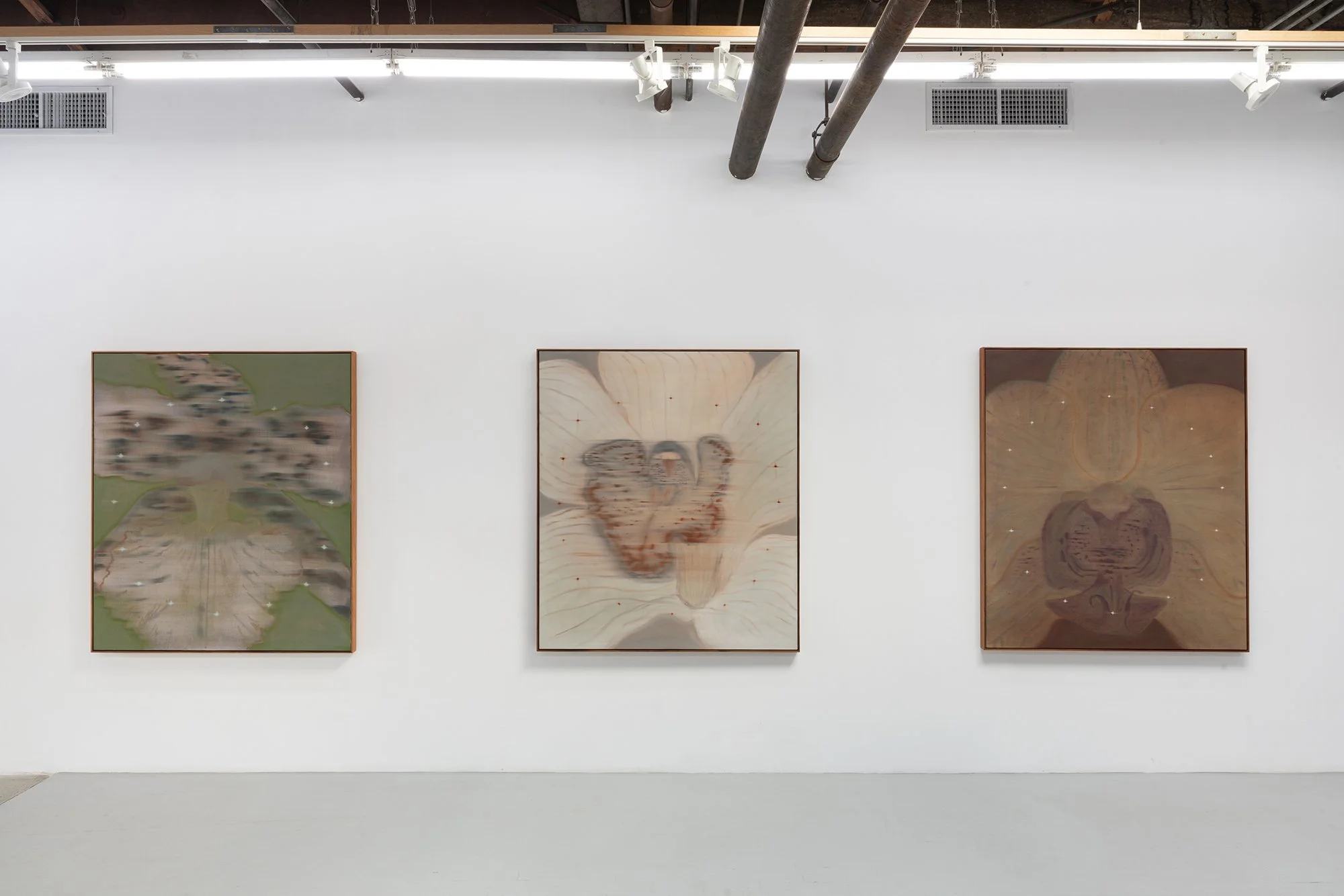
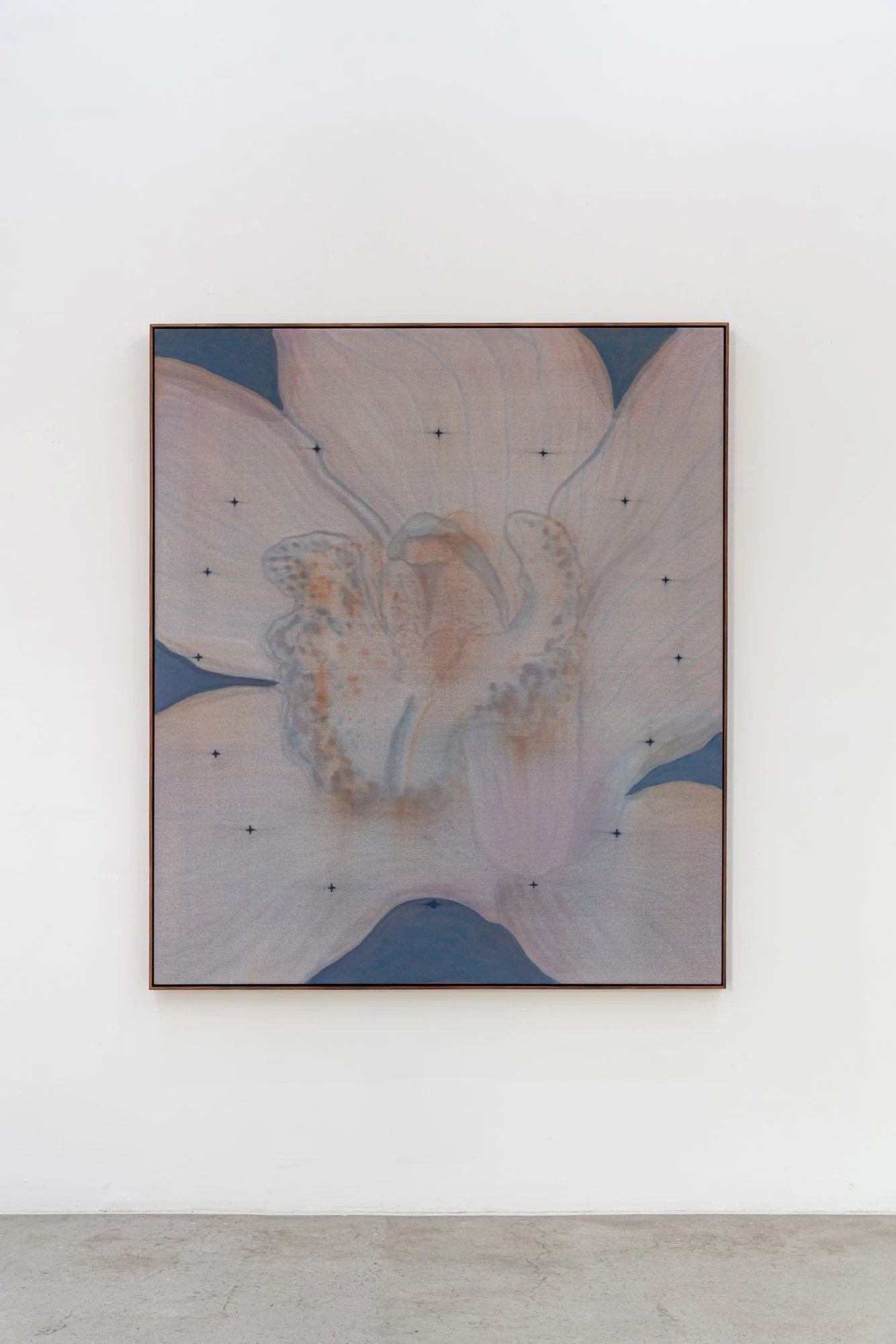
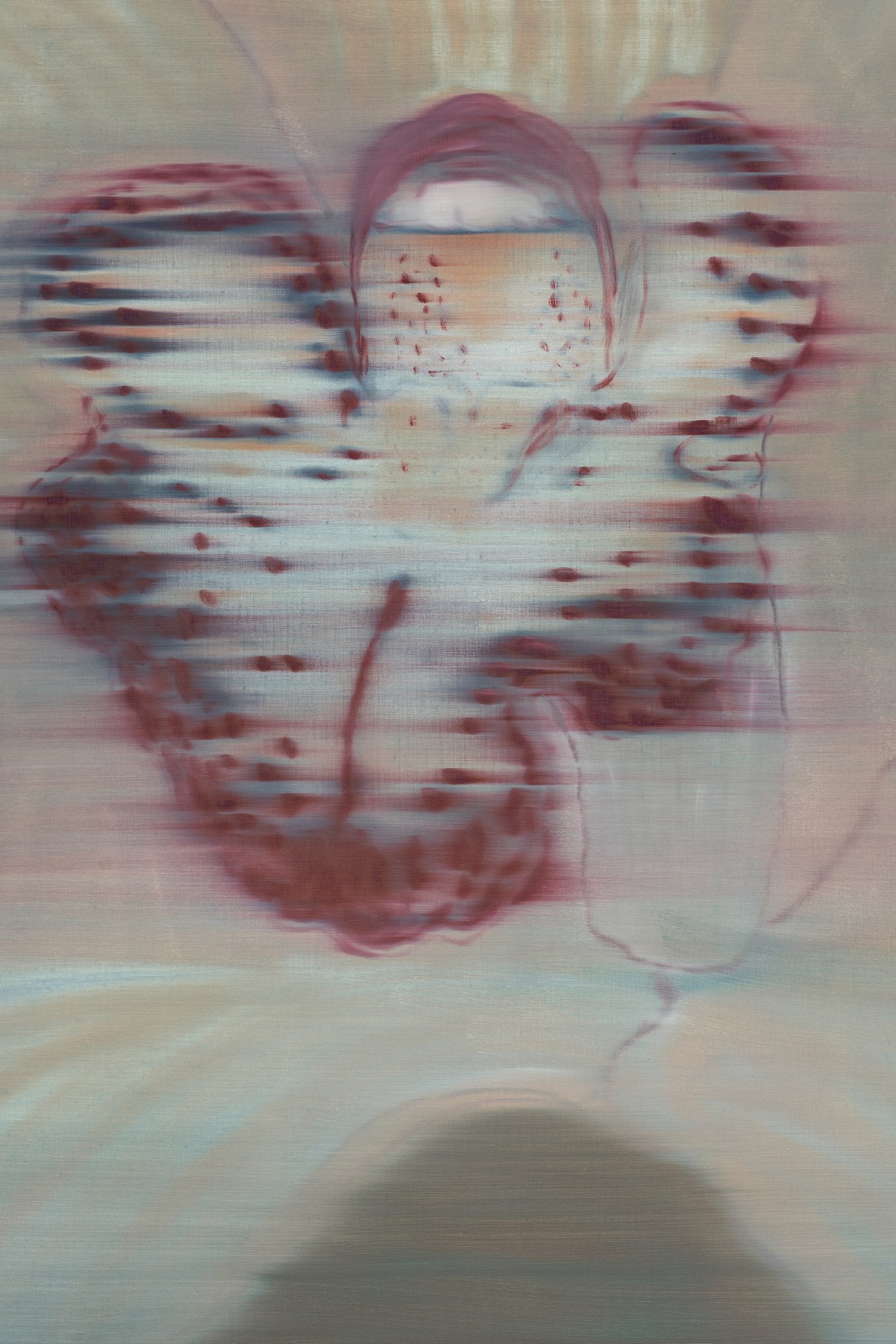
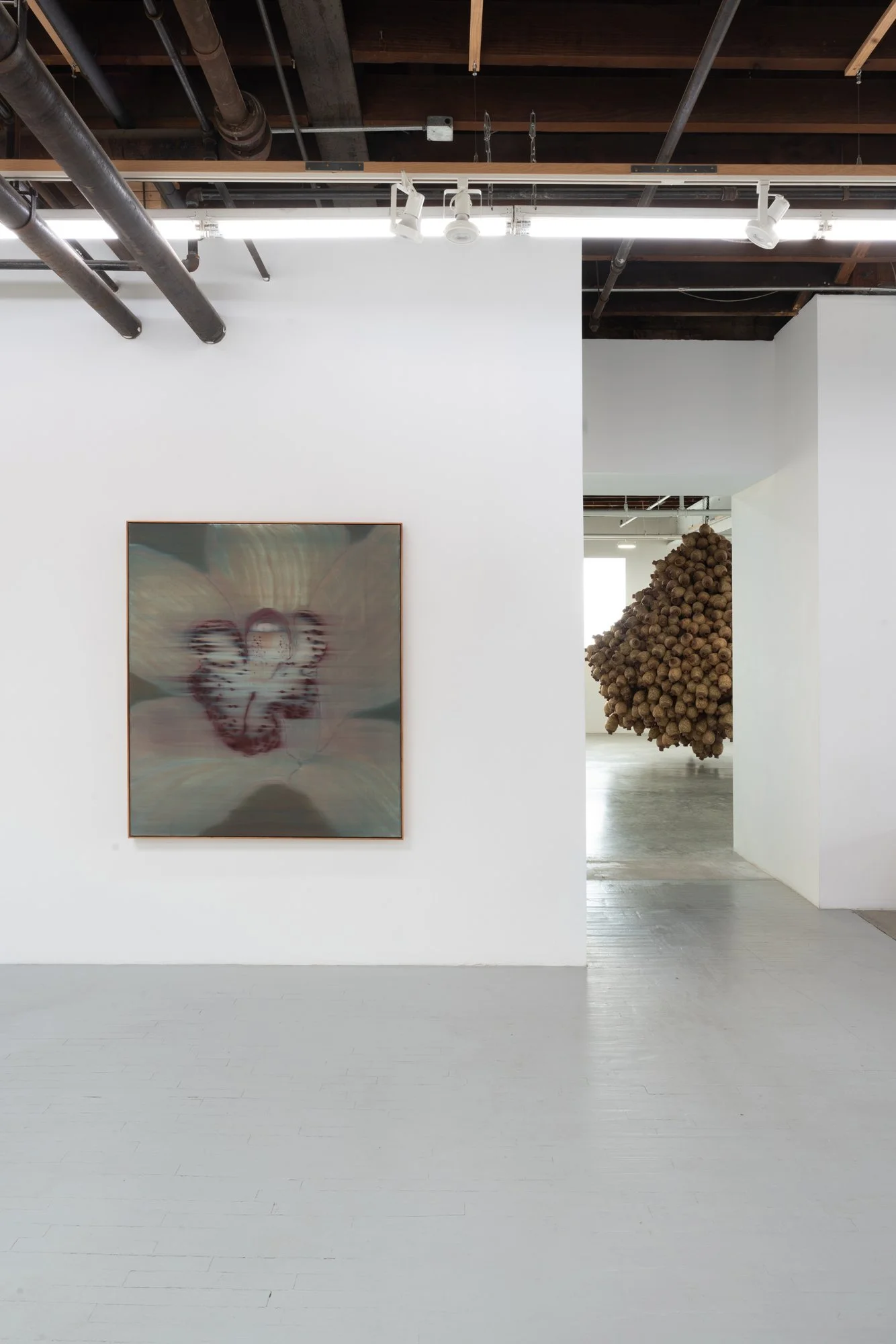
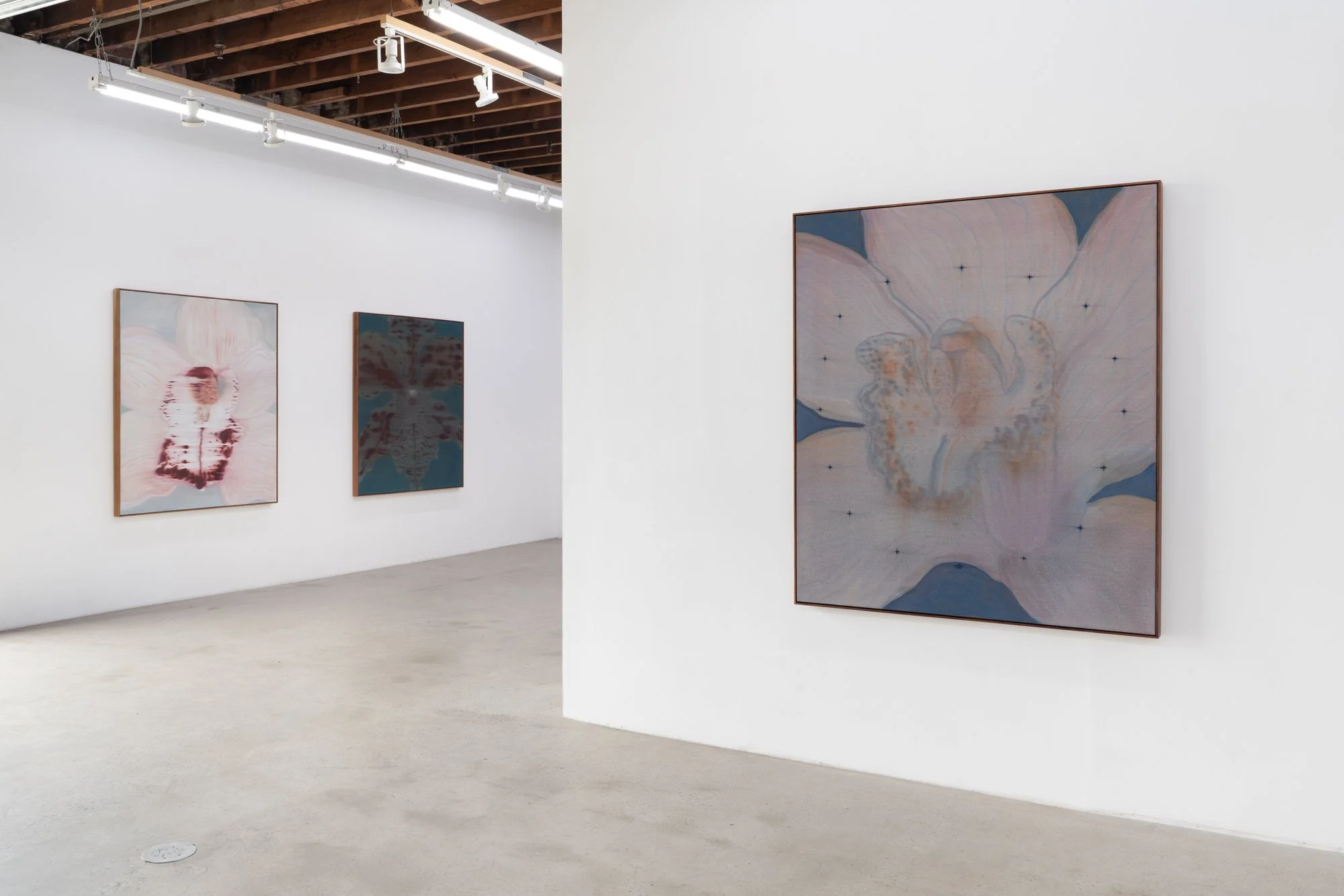
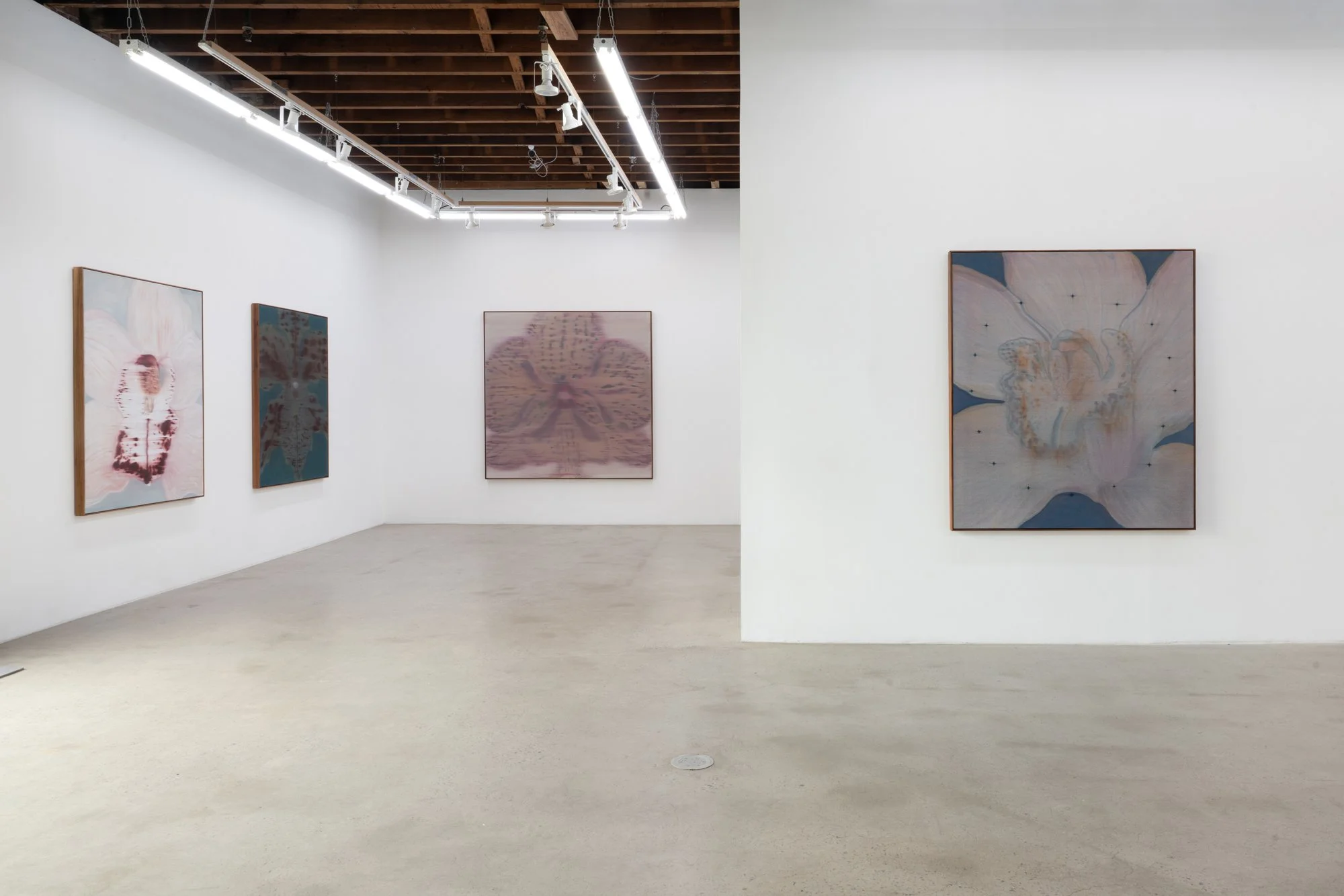
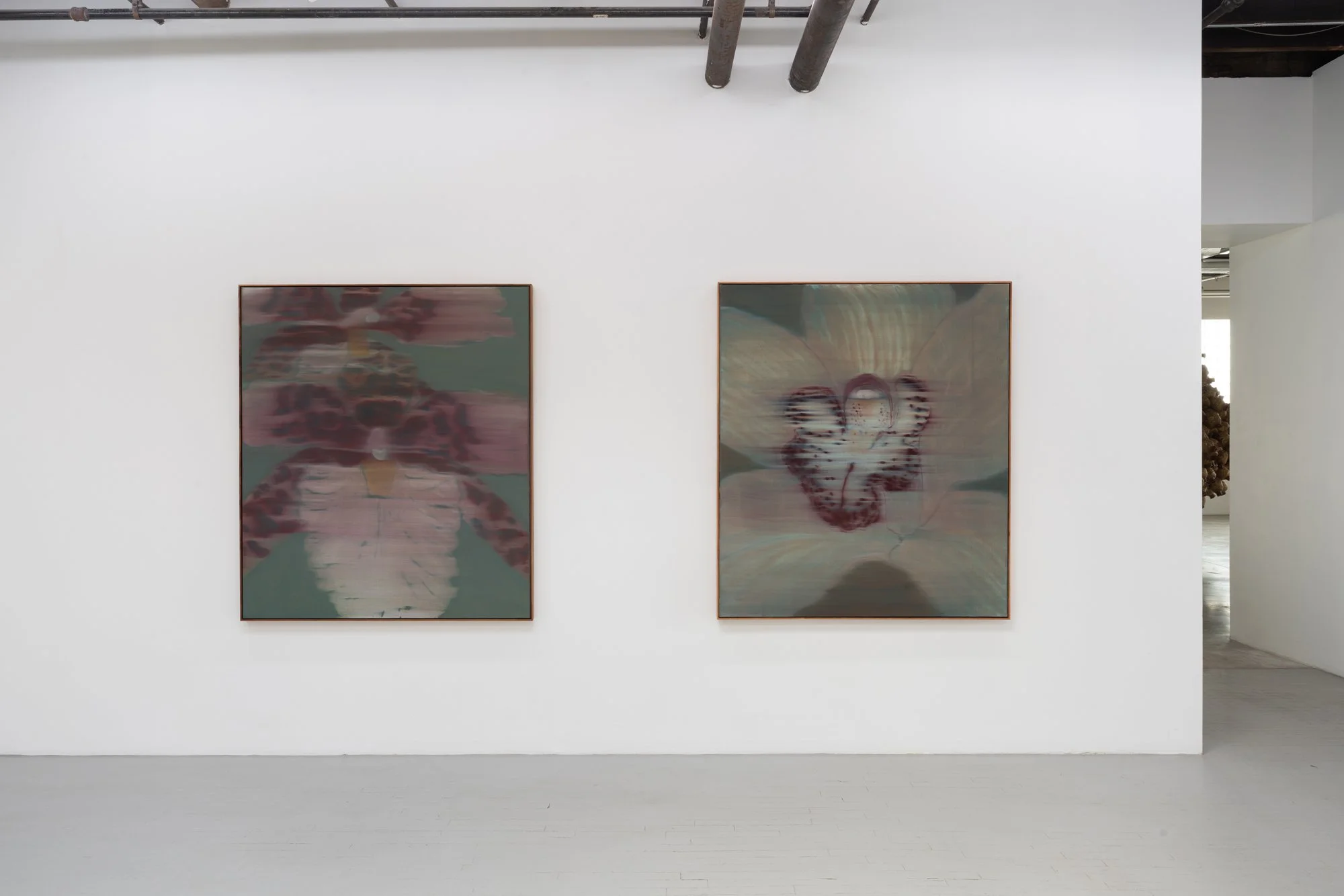
Such becomings come to mind when confronted with the paintings in Heath Wae’s Mineral Meridian. These orchids open, as though captured at the height of their blooming – perhaps the most familiar form of becoming found in nature. Magnified, their edges blurred as though perceived through a thin mist, they appear to extend beyond the frame. They do not ask to be observed, like specimens under glass. They engross, they envelop; they are three-dimensional, immersive. The atmosphere they evoke is humid, volatile, voluptuous. Soft gradations of tone and the palette’s spectrum of warm, serene pastels convey harmony, but something about the presiding forms – their subtle uncanniness, their quality of in-betweenness – hint at altered states of consciousness. These paintings recall the unexpected perceptual fireworks of deep relaxation, the visions that arise during experiences of sensory deprivation.
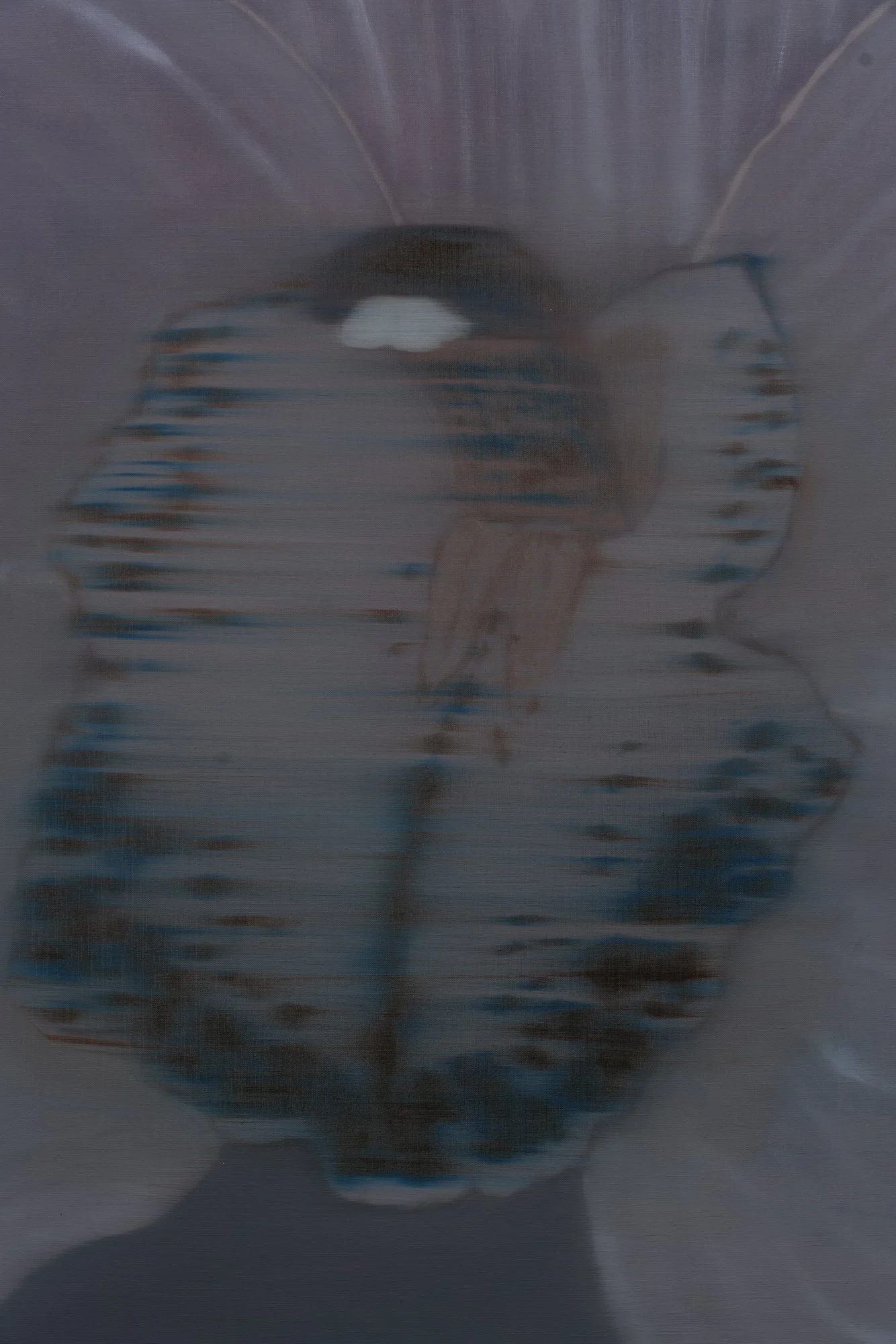
Distortions in scale, perspective, and colour set these flowers apart from the conventional visual imaginary of the floral. These are not cliched symbols of femininity; nor are these situated within a lineage of botanical drawing, with its emphasis on illustration, detail and classification. Wae sheds figurative, narrative, and illustrative constraints, and positions the floral within a larger frame of reference that foregrounds the immensity and intensities of nature, and its transformative, transitional states. Wae’s paintings construct a site of encounter in which the viewer becomes akin to the roaming male wasp. We come to think and feel in common with these paintings; we are enlisted into a heightened mode of perception that privileges haptic sensory data. Blurriness, which characterises all the paintings in the presentation, is not a symptom of indistinctness, of vagueness: rather, it is a strategy of refocusing – a commitment to tactility. In the absence of figurative detail, attention is drawn to light and densities: the texture of the petal, soft and cool to touch, the firm stamen, the freshness and motion of the air. These are techniques of contact that bring the viewer closer. The body becomes attuned to the paintings’ senses, and afterwards, our surroundings appear different. Flowers are no longer part of an inert, decorative background, but are alive with patterns, energies, and rhythms. They have become subjects rather than objects.
There is an ethical dimension to this. The perceived passivity of the natural world is what has made it so vulnerable to (violent) human intervention, and what has justified its discipline, consumption and destruction. Plants might be fundamentally other to us in myriad experiential and ontological ways, but what we share with them is an environment. Inevitably, we are entangled, and these paintings serve to remind us of this fact. So much about the specific aliveness of plants remains untranslatable – what would it be like to be rooted in place, experiencing death and rebirth according to the seasons? – and Wae doesn’t shy away from this alterity. These works are as much depictions of orchids as they are non-literal explorations of what comprises their alien being: (inter)connection, heterogeneity, rupture, and multiplicity.
Wae’s practice acknowledges art’s capacity to spark neural pathways, induce physical and emotional movement and stir spiritual energies. These paintings invite us to consider the elements that quicken flowers into being: soil, nutrients, wind, water, pressure and heat are all felt swirling underneath these works’ surfaces. In doing so, they also ask us what, as human animals, underlies our existence. One possible answer suggested by these paintings is the erotic. The orchid has always carried a scent of sexuality. Its name, derived from the Greek ‘orchis’ suggests a masculine erotic undertone, but as colonial expansion exposed more of the world to Victorian expeditions, a mania developed around the flower that partly arose out of its association with femininity and desire. (The protagonist of Marcel Proust’s 1913 novel In Search of Lost Time, for instance, has a private shorthand in which sexual contact is to ‘make catteleya’ because of his lover Odette’s passion for orchids.) In Wae’s paintings, the orchid retains these threads of fantasy, sensuality, and excess, but perhaps more powerfully, it channels what Sigmund Freud would later define as eros: not just sexual instinct, but life force.
Each painting constitutes a zone of intense affect in which psychic and cosmic drives collide. Yet, in spite of the emphasis on the intangible, Wae remains equally sensitive to materiality. Hand-foraged and processed pigments are part of Wae’s heterogenous list of materials: amongst them, seaweed emulsions, myrrh resin binders, frankincense tinctures and acacia gum extractions. Wae eloquently describes his materials as ‘time-bearing’. Painting typically erases the histories embedded into its medium, using pigments and minerals solely for their visual qualities, their function as surface. Wae subverts this norm by going straight to the source, to the minerals themselves, and through this strategy he preserves a flicker of his pigments’ past temporalities. There are becomings in this process too: from fragment of earth to visual tool. But in Wae’s handling, the latent histories and energies of the mineral persist and enliven his use of colour and form. The paintings in Mineral Meridian continue to become. Unlike the fleeting bloom of a flower, the living elements Wae gathers in the act of making ensure that their becoming has no end.
Essay by Rebecca Birrell, PhD
Heath Wae (b. 1989, Melbourne, Australia) is an Australian artist based in Bundjalung Country, NSW. Since graduating from Sydney College of the Arts, Wae has travelled extensively throughout Asia, Europe, and the Americas, undertaking what might be understood as contemporary pilgrimages. These expeditions, often guided by spiritual and cultural lineages, have shaped a sensibility attuned to symbolic language, ritual forms, and the intelligence of place. Wae has exhibited across his native Australia, the United Kingdom, the United States, and Asia for the past decade. In 2025, Wae and his partner Tais Rose Wae created a body of work, The Garden Silhouettes the Myth, during an immersive residency at Kelvedon Hall, an 18th-century estate in Essex, presented by The Dot Project. Wae has presented three solo exhibitions with The Dot Project in London, most recently Devotions (2024); he has also shown with Harvey Galleries in Sydney, and Otomys Contemporary in Melbourne. Mineral Meridian at CARVALHO will be Wae's first solo exhibition in New York. His work has been featured in The Financial Times, Architectural Digest, The Design Files, Pampa Journal, and The World of Interiors. Wae’s work is held in significant private collections internationally, including the royal family of Qatar.