
KAT HOWARD: IN PLACE OF NO, MY MOUTH LEAKS HONEY
OPENING THURSDAY, APRIL 2, 6—8PM
ON VIEW APRIL 3—MAY 30, 2026
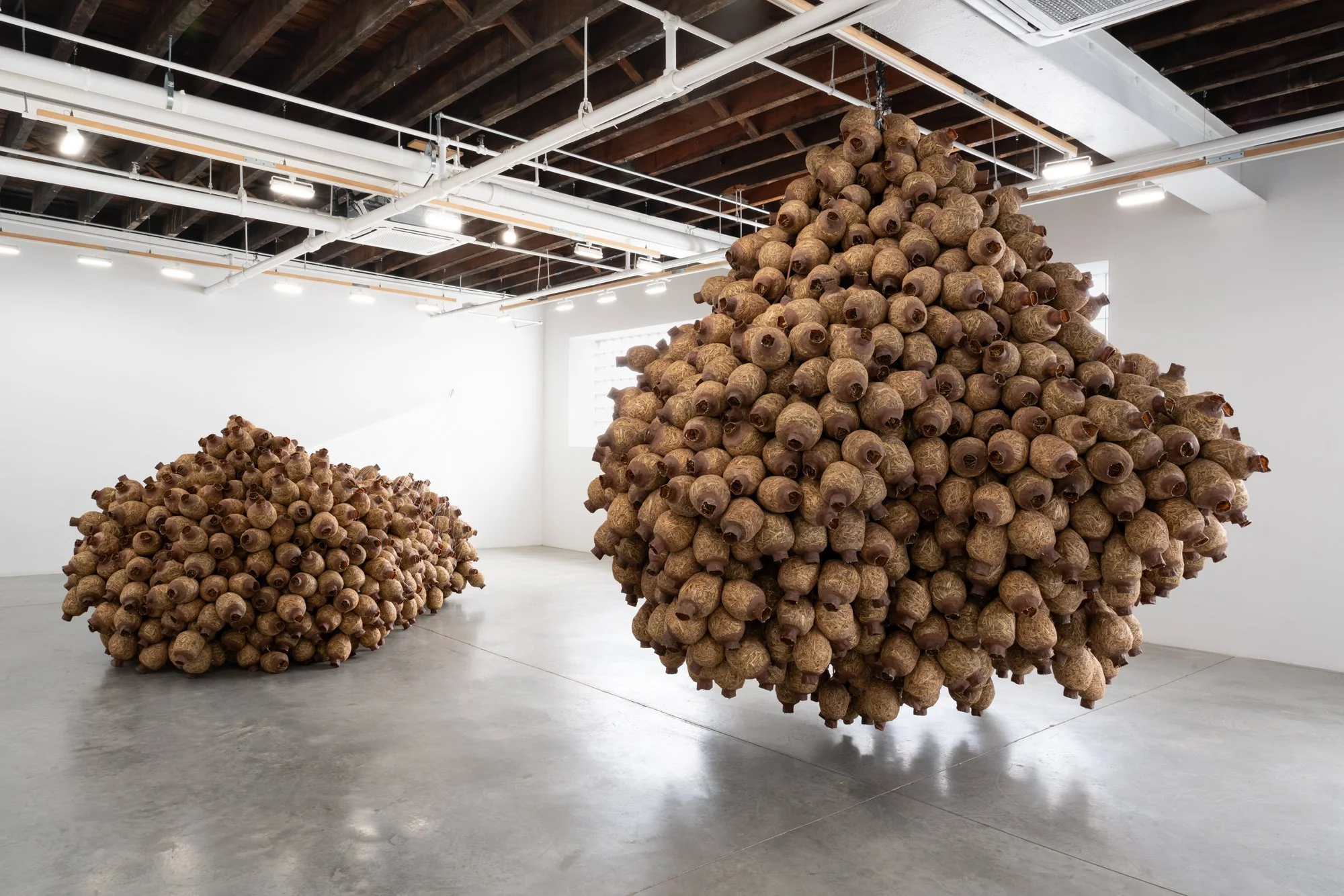
There is a piece of folk wisdom that demands beekeepers keep their hives abreast of any transformative emotional events in their lives. ‘Tell it to the bees,’ they have been advised, since at least the nineteenth century, though some say the practice can be traced back to ancient times when bees were understood as possessing oracular wisdom and sacred purpose, and their hives were common loci of religious ritual. Bees were understood then as belonging to a liminal realm, mediating between the world of the living and the dead, the mortal and the divine. This sense of their mysterious spiritual significance lingers. Deaths are considered particularly important to report; in previous centuries, hives went into mourning like any other member of a family. You ignore this instruction at your own risk. The bees will intuit change: they might abandon their hives; worse, they might plunge your household into a spell of bad luck. Beehives must be trusted, their power honored. The beehive as a vessel for secrets, as a repository of feeling, drives the use of the hive as a motif in two new sculptures by Kat Howard.
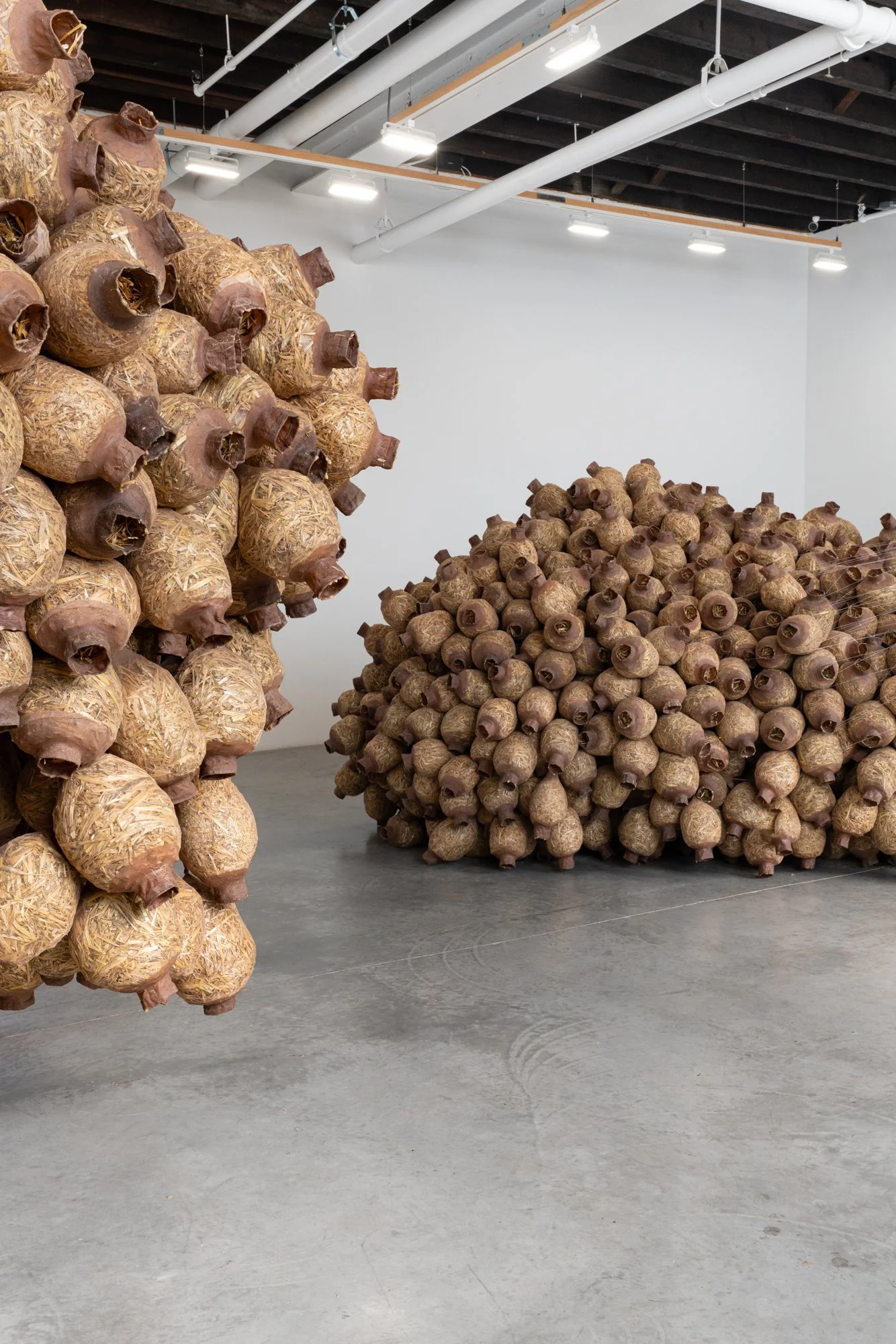
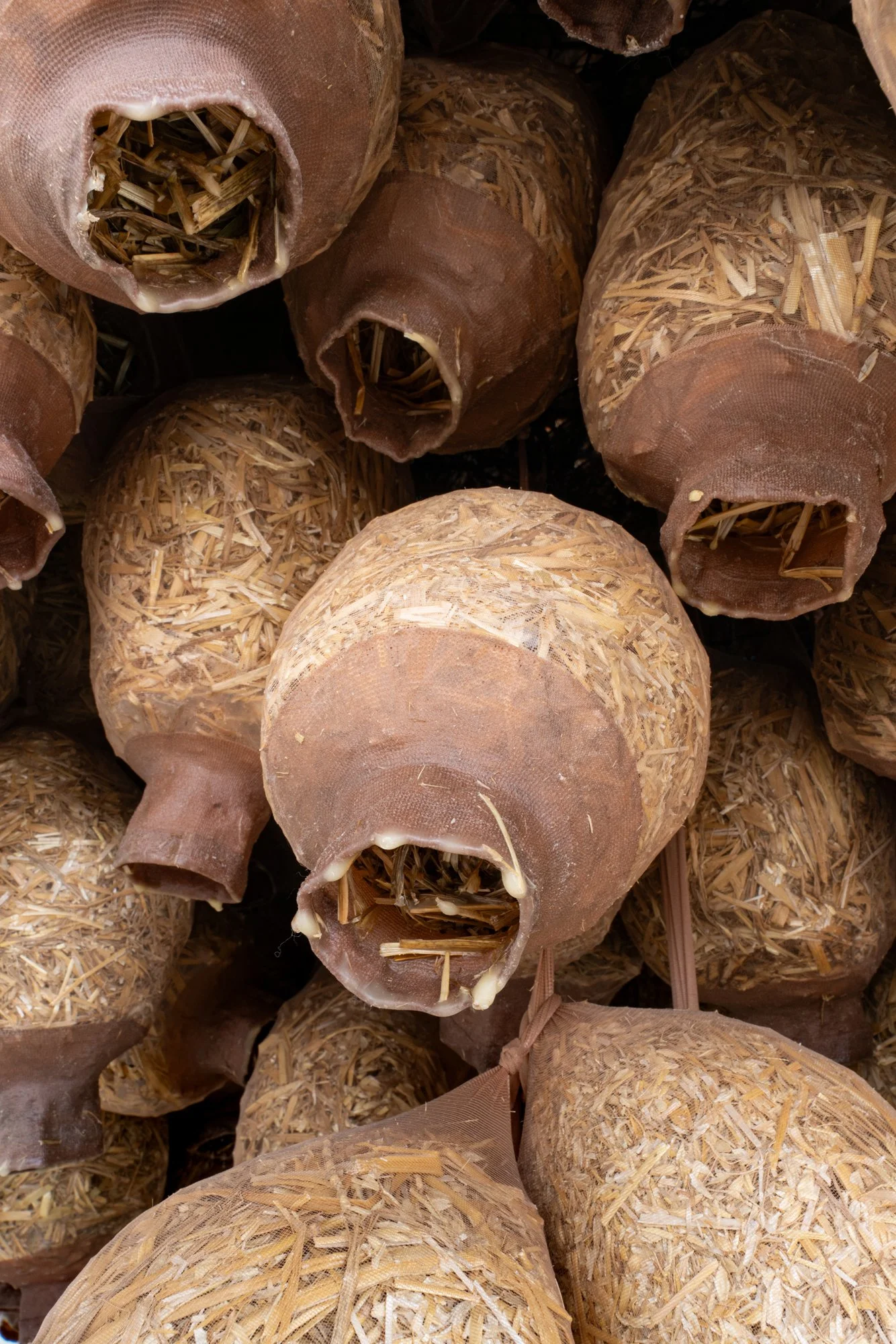
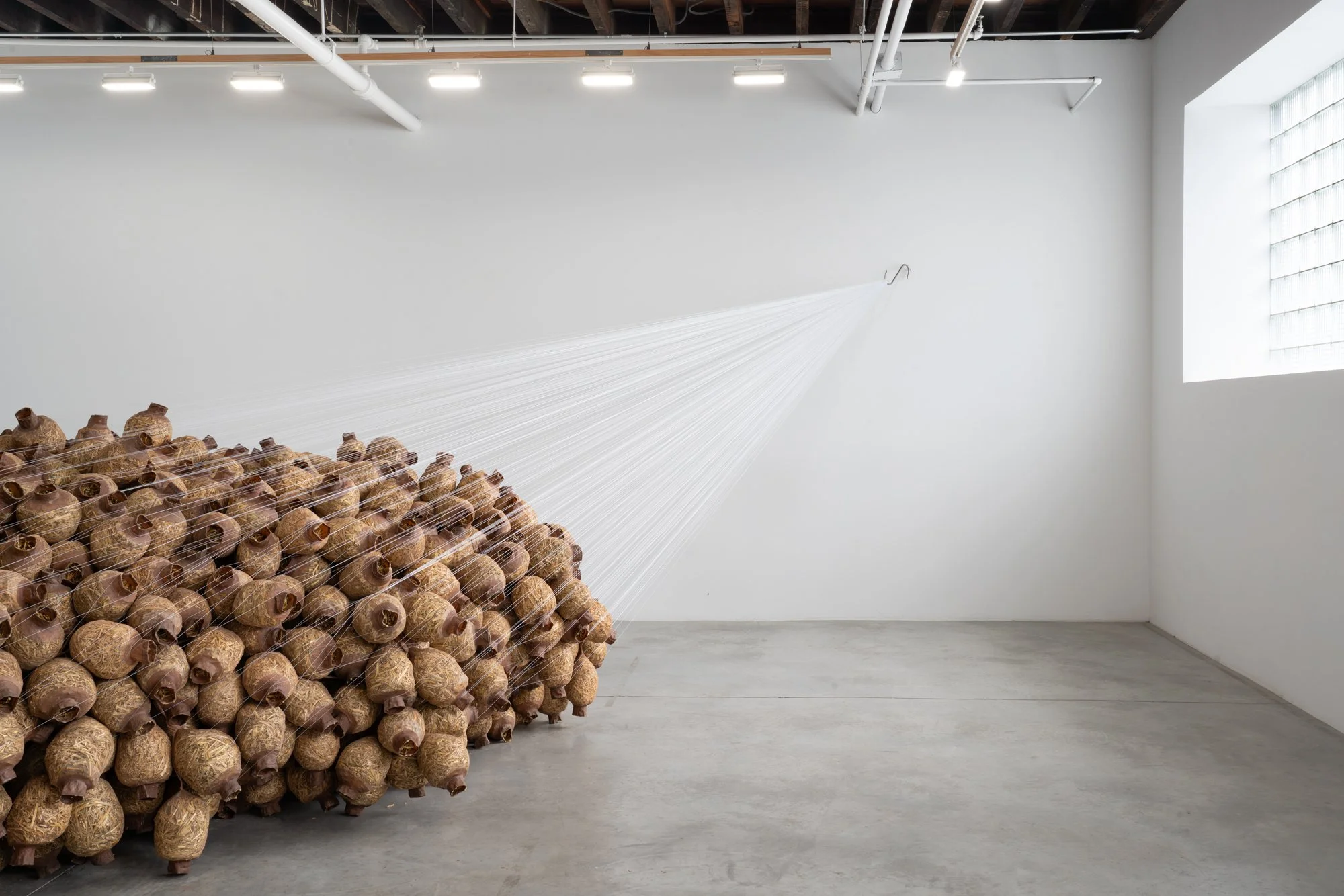
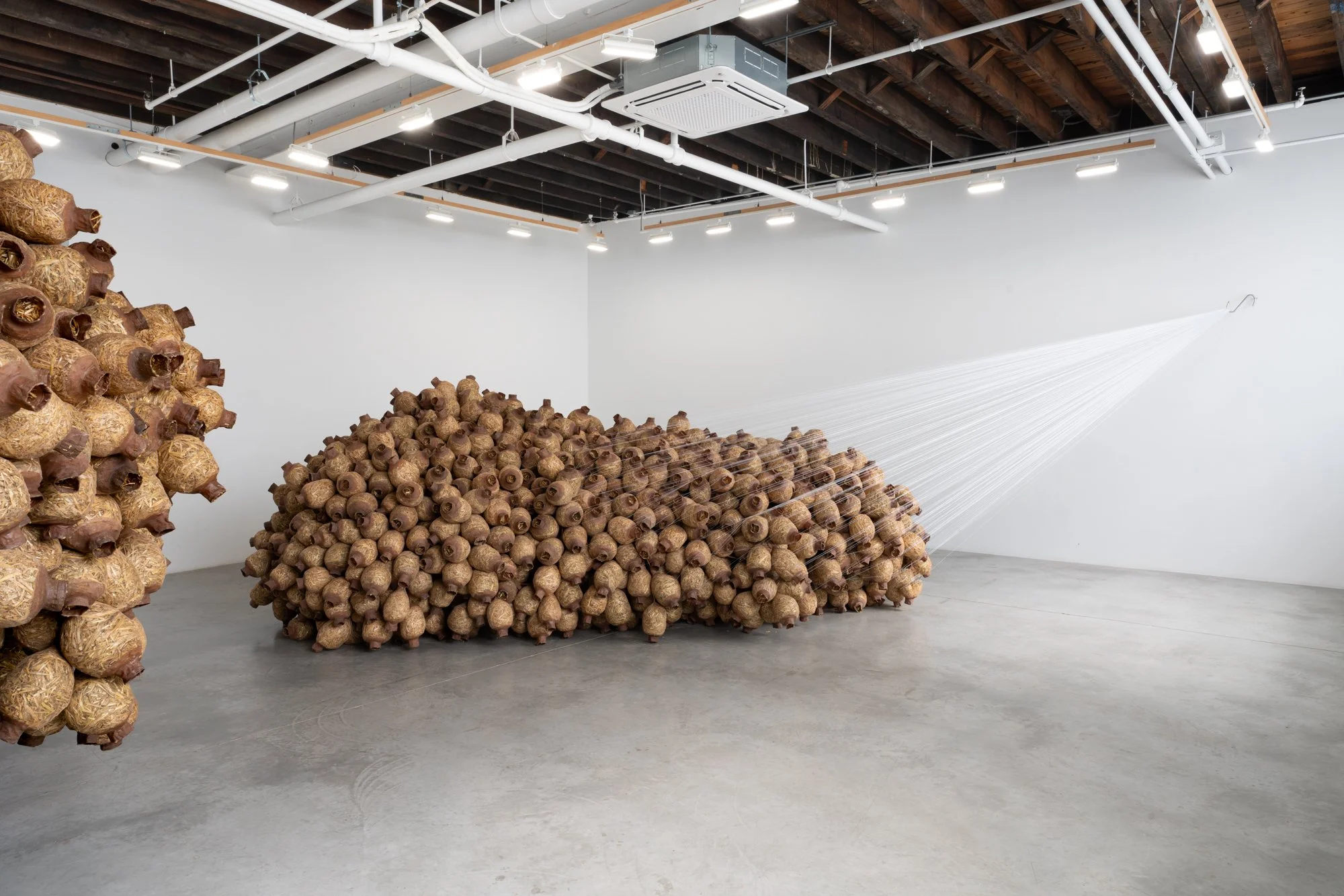
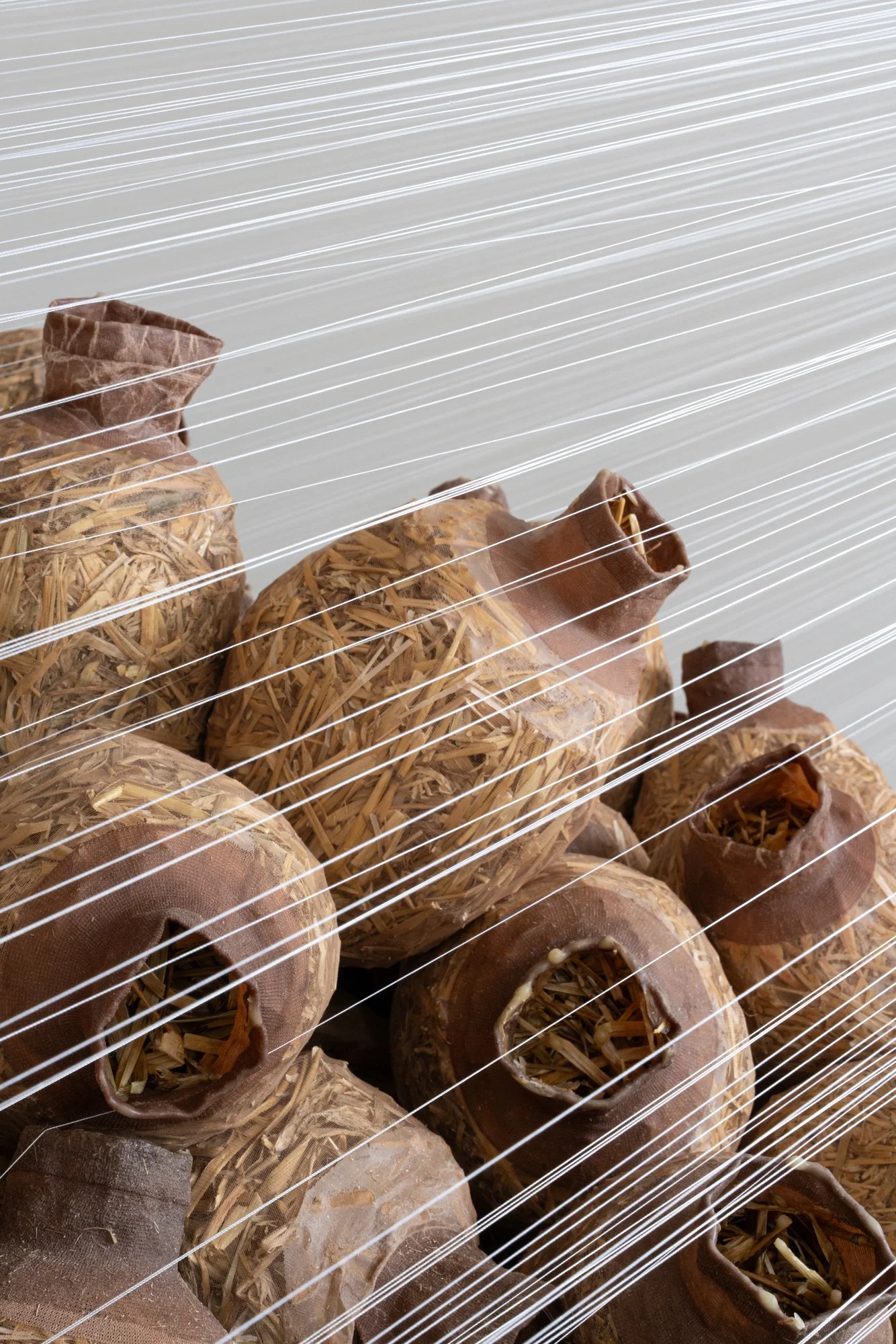
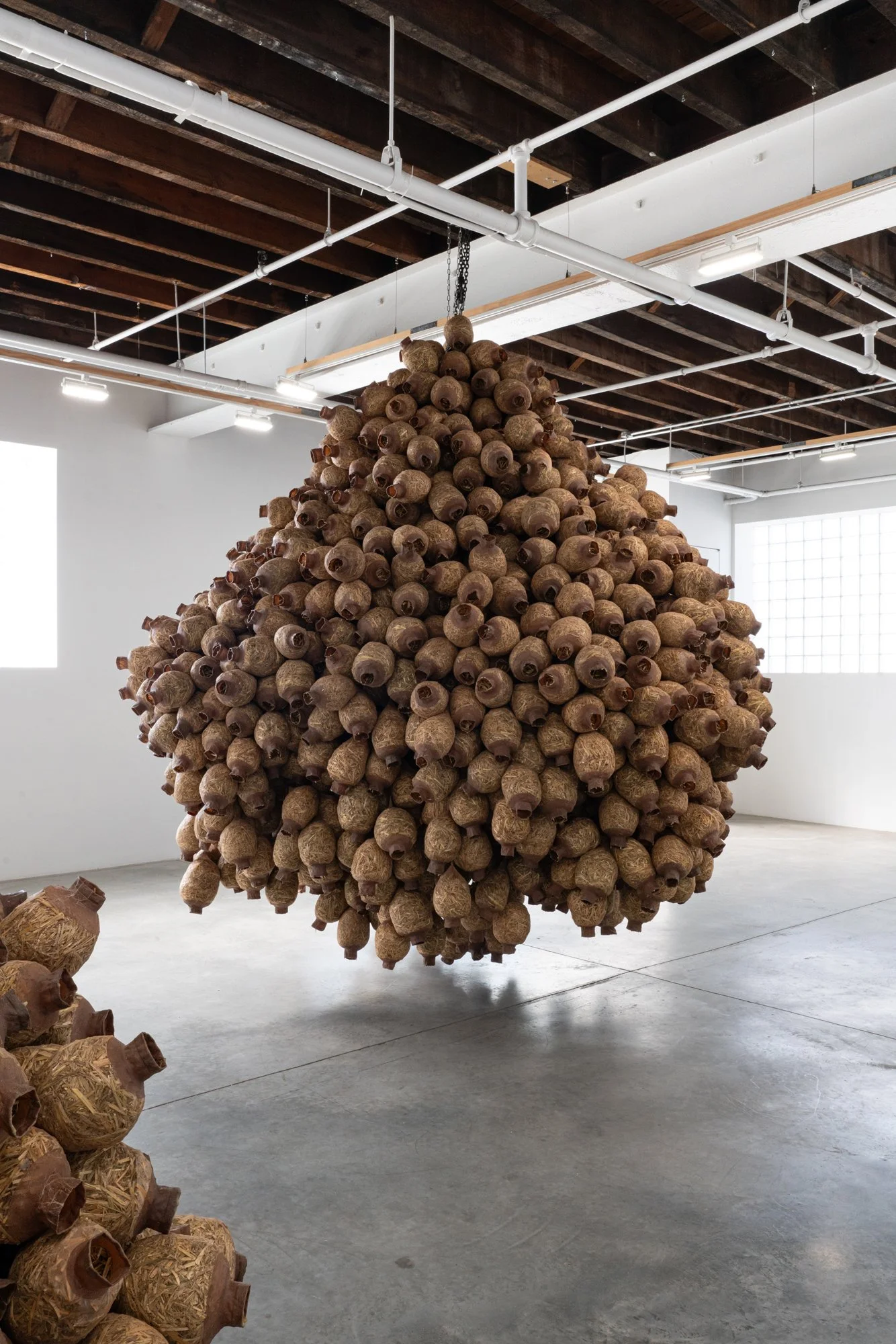
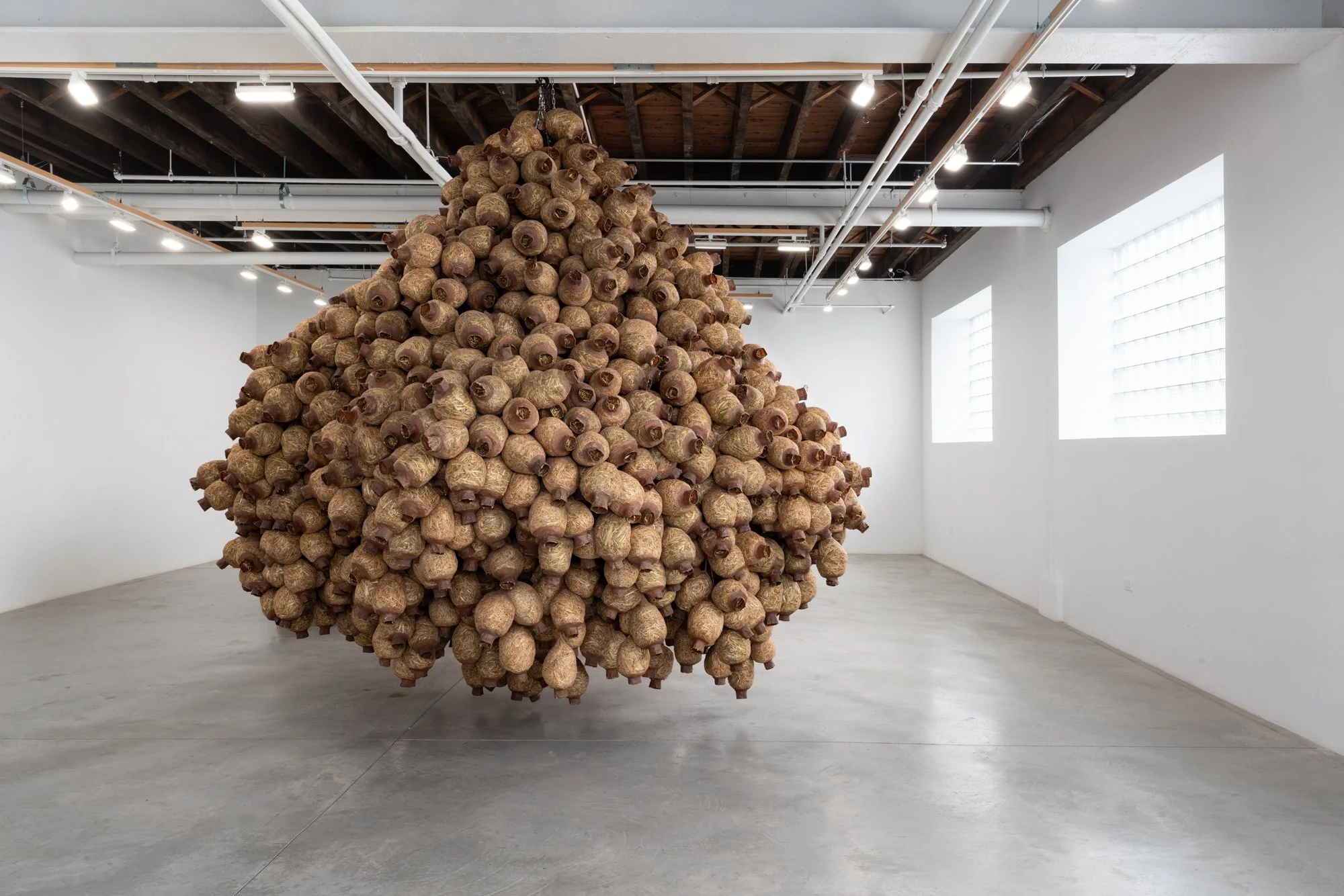
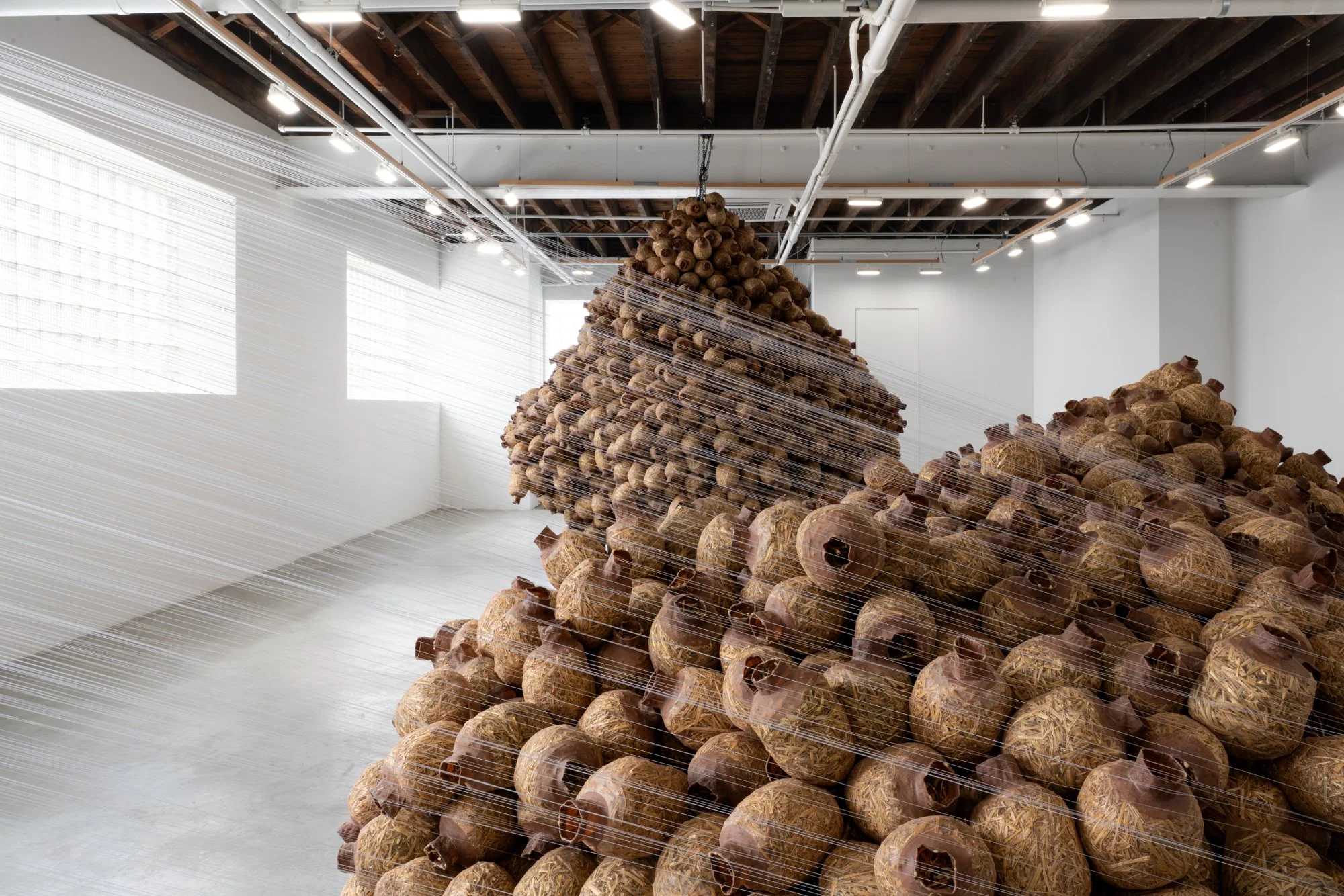
A hive is constructed out of beeswax produced by the bodies of thousands of bees that live and work within its structure. The lightweight feel and texture of Howard’s forms in Mother, sculpted from nylon knee high stockings and straw, visually recall the hive, but perhaps the most vivid resemblance is olfactory. Each handmade orb has had its mouth dipped into beeswax, with the drip of the wax preserved by gravity and air drying. This technique produces a potent, animal scent: the sweetness of beeswax intermixed with the earthy aroma of straw. A viewer has some agency over where they look: they can always look away. But smell is less spatially defined than vision: it is immersive, often overpowering. Smell is also subjective: what is cloying to one person might be comforting to another, as Howard explains to me.
Smell is deeply intertwined with emotions, sexuality, the visceral experience of living, and can trigger the reemergence of memories. Howard’s work is addressed to, amongst other things, the experience of trauma, and the salience of scent is part of this exploration of its everyday phenomenology. The hive, entrusted with the grief of its keepers, becomes a metaphor for the body, which must carry and make sense of the mind’s intensities. The tense entanglement of mind and body becomes more fraught, and therefore more visible, when processing the heightened psychic material of trauma. We are never more aware of how our thoughts are entangled with our physical responses: how memory is full of sensory data and isn’t ever just a static image. With their colossal scale, and sweeping affective dimensions, Howard’s sculptures make exaggeratedly external what is often oppressively confined to the internal, conveying the richness and complexity of how feelings are felt, embodied, and remembered. There is hope in Howard’s chosen imagery. The hive might fracture under stress, but it also has the capacity to regenerate.
Overlooked or discarded materials from both natural and domestic settings form the backbone of Howard’s work. This feels apt given Howard’s commitment to voicing experiences that otherwise struggle to be articulated: what society insists we must repress and throw aside is given new visibility through materials granted a second life. But this isn’t her medium’s only dimension of meaning. The structures that comprise Mother echo the appearance of woven straw baskets, a craft that has accompanied human life from its earliest presence on earth and has historically been practiced by communities of women. At the same time, the nylon stocking is a motif of femininity that suggests its artifice and disposability. These ancient and modern symbols of gendered experience come together to allude to the creativity and acts of self-making intrinsic to women’s lives.
Howard also encourages us to see the forms as entire human figures, as subjects rather than objects, with subtle references to the Paleolithic figurine, the Willendorf Venus. The curved, squat, earth-hued sculptures of Mother resemble the short, amble body of the Venus, which dates back nearly thirty thousand years. Not a lot is known about the precise meaning of the figurine. Some say she is a fertility goddess; others that she is a more general good luck omen. Arguably, what has made her such an enduring mystery since she was found on an archaeological dig in 1908 is how alien she feels as a depiction of a woman. As an example of the nude, she represents an entirely different standard of beauty and desirability. Another interpretation takes her singularity, her separateness from a patriarchal system of value, and concludes that she must be a woman’s self-portrait. This might alter how we see Howard’s Mother. The analogy with the hive remains. But a parallel interpretation understands Mother, as the title suggests, as a community of women, as matriarchs, and like the Willendorf Venus, their power is immense and mysterious—undetermined, and therefore without fixed limit.
Essay by Rebecca Birrell, PhD
Kat Howard’s inaugural show with CARVALHO, In place no, my mouth leaks honey, opens in the gallery’s 110 Waterbury St. space the evening of April 2 from 6 – 8pm, with the artist in attendance. The site-specific installation remains on view through May 30.
Kat Howard (b. 1984, Rochester, NY) is a sculptor and installation artist based in Kingston, New York. She holds a BA in Creative Writing and Art History from Brandeis University (2006), as well as two MFAs from Mills College in Studio Art and Creative Writing (2013). Upon completing her BA, Howard worked at the Whitney Museum of American Art as their first Manager of Interactive Media. In 2010, she exited the museum sphere to work as an independent artist. Working largely in fiber and found material, her sculptures interrogate the complicated, embodied process of healing from trauma, examining the burden and pressure to conceal or bear the truth. Howard’s work has been exhibited at CARVALHO, New York (2026), Lawton Mull (2025), BCMT Gallery (2024), Dorsky Museum of Art (2023), Dunedin Fine Art Center (2023), Palo Gallery (2023), Marist College (2022), Union College (2022), Tanja Grunert Gallery (2022), and Bunker Artspace (2021), and was recently awarded the Open Studio Residency at the Haystack Mountain School of Craft.